Should an AI wearable always listen?
An always-listening AI wearable can capture more, but intentional recording creates clearer boundaries, collects less unrelated speech and makes consent easier to understand.
A practical comparison of intentional and ambient AI wearables, including the trade-offs in recall, privacy, bystander consent, data volume and everyday trust.
The short answer
An AI wearable does not need to listen continuously to be useful. For personal notes and selected conversations, the safer default is inactivity: recording begins only after a deliberate action and ends when the chosen moment is complete.
Always-listening and intentional capture solve different problems. Ambient capture optimizes for completeness. Intentional capture optimizes for choice, legibility and minimum necessary collection. The right design depends on which failure matters more: missing a moment or collecting moments that were never meant to become data.
The difference is operational, not cosmetic
An always-listening wearable keeps a microphone or audio buffer active so it can detect speech, a wake phrase or a moment worth saving. A manually controlled wearable remains inactive until the user presses, taps or otherwise makes a clear capture decision.
A light or icon can improve notice, but it does not turn ambient collection into intentional collection. The meaningful questions are what starts recording, what is retained, what is processed, and whether a person can reliably tell when each state begins and ends.
Ambient capture creates a larger privacy surface
Continuous collection can include unrelated speech, private background details and people who did not choose to participate. Even when most audio is later discarded, the system still needs rules for buffering, processing, access, failure recovery and deletion.
Intentional capture reduces that surface by limiting the recording window. It does not remove the need for consent, security or retention controls, but it makes the product boundary easier to explain to the wearer and to nearby people.
- Is the microphone inactive until a deliberate gesture?
- Can nearby people understand when capture is active?
- Are raw audio and transcripts retained separately?
- Can the owner correct, export, delete and revoke access later?
Completeness has a cost
The strongest argument for ambient capture is recall: the system can preserve something the wearer did not know would matter. That can be useful in a narrow, consented setting, but it also transfers more editorial responsibility to software after collection has already happened.
Intentional capture accepts that some moments will be missed. In return, it gives the person a simple editorial role before collection: press when the idea, decision or consented conversation becomes worth keeping.
How to evaluate an AI wearable
Do not stop at the phrase “privacy-first.” Ask for the recording states and data path in plain language. A trustworthy product should be able to answer the same questions before purchase and after setup.
- What exact action starts and stops capture?
- What happens if the indicator, transfer or processing step fails?
- Which data can a connected AI retrieve—and is raw audio excluded?
- How long does each data form remain, and who can delete it?
- Does a captured intention remain context rather than permission to act?
BEFORE’s intentional boundary
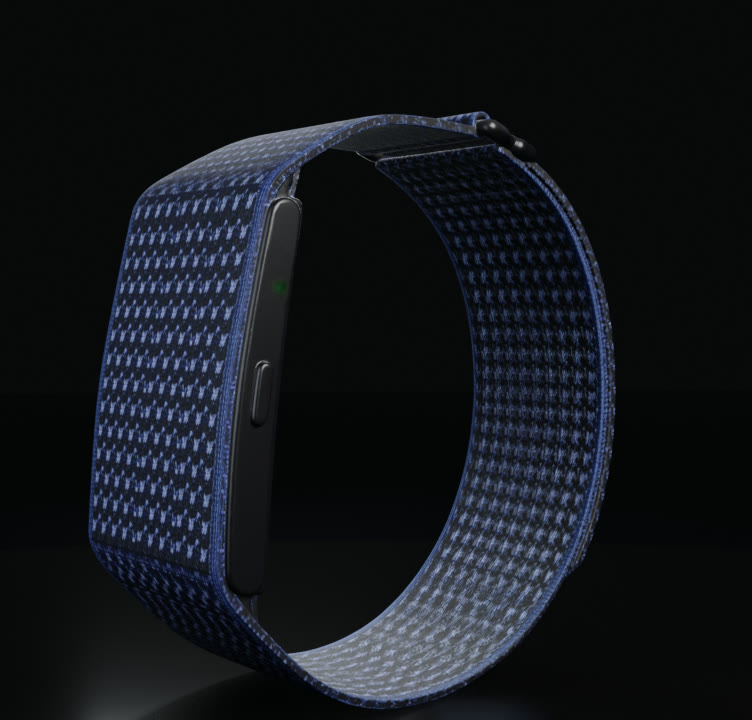
BEFORE.Band is designed without a wake word or always-listening mode. The product target is one-press capture for a thought or consented conversation, followed by private processing into source-linked context for an AI workspace the user authorizes.
That is a product-design boundary, not a claim that the physical behavior has already passed acceptance. The exact recording feedback, offline storage and transfer recovery still have to be verified on registered hardware samples before they are presented as proven capabilities.
One press. One faithful transcript.
Reserve your band